Feb 18th Update - The 700-Mile Mirror

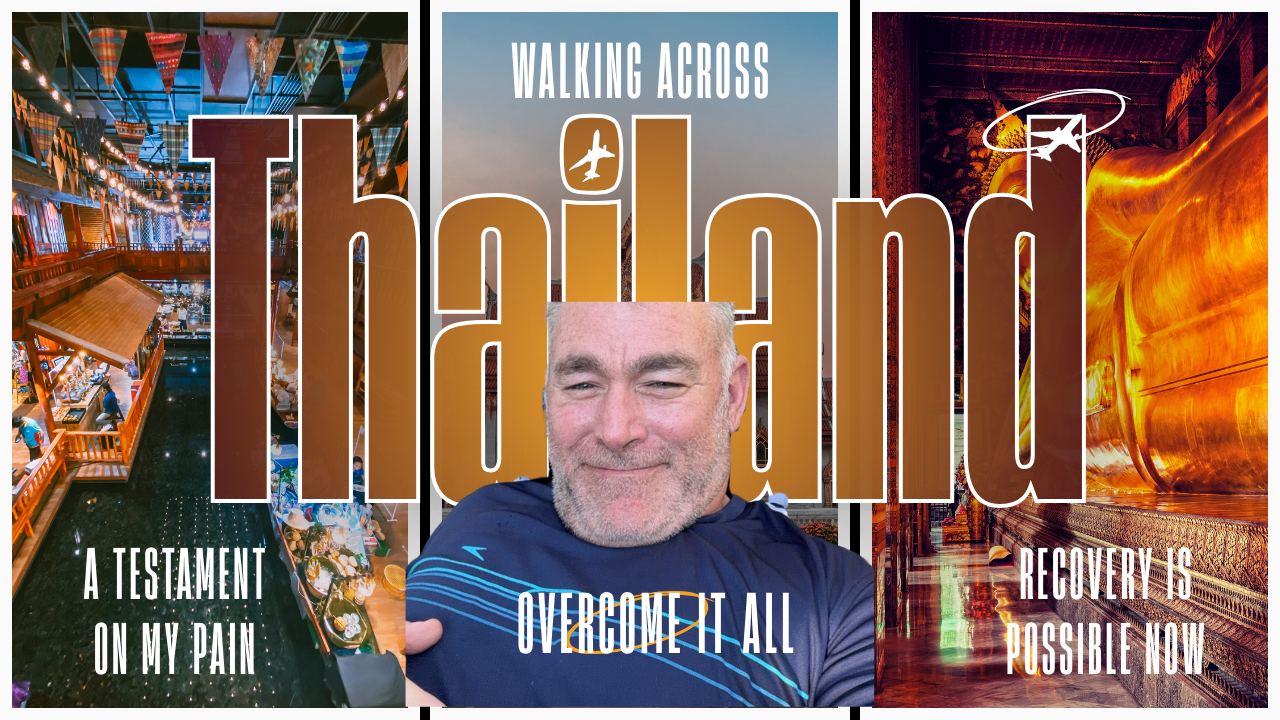
The 700-Mile Mirror: What Walking Across Thailand Taught Me About DisciplineOn January 25th, the negotiation ended.TJ stepped out of Chiang Mai with a backpack and a heavy realization: he was a man who was strong in theory but inconsistent in action. The 700-mile trek to Phuket wasn't conceived as a scenic tour or a bid for social media relevance. It was a psychological departure—a deliberate attempt to walk away from a version of himself that was tired of saying he wanted change while living out the same patterns every day.By choosing a goal so hard and so visible, he removed the option to quietly quit. This is what happens when you stop chasing "hype" and start chasing alignment.
1. Discipline is a Fact, Not a Feeling
We often wait for the right mood to strike before we tackle our goals. On the road to Phuket, that luxury disappears at 2:00 AM.There are "rowdy" days characterized by the visceral pain of three hundred miles of blisters and highway rash. TJ describes the experience with a raw honesty: some days feel powerful, but others feel like he is "losing a fist fight." When you are in the middle of that metaphorical beating, motivation is useless.True discipline functions independently of your emotional state. It is the mechanical act of moving when every nerve in your body would rather sit down."It's not motivation or hype it's just pure discipline... waking up when I don't feel like it."
2. Removing the "Anesthesia" of Daily Life
Modern life provides an elaborate system of "anesthesia"—alcohol, mindless phone scrolling, and the constant hum of digital noise that numbs us to our reality. Physical hardship acts as a solvent for these habits.When you are on a long-distance walk, there are no bars to duck into and no hours to lose in a feed. When the distractions are stripped away, the silence becomes a mirror. You are forced into an encounter with yourself, and there is nowhere to hide from your weaknesses or your thoughts. One step at a time becomes the only way to survive the clarity."When you remove the alcohol and you remove the anesthesia of it all... you meet yourself."
3. Strength is Quieter Than We Think
We often conceptualize strength as a loud, performative act—a bracing for impact or a "clinching" of the jaw to survive a crisis. However, the road reveals a different truth. Strength is not a momentary explosion of effort; it is the quiet, repetitive choice to remain in alignment with your goals when no one is watching.It is the act of choosing long-term purpose over short-term relief, doing the work whether it feels epic or ordinary. It is the silence of the 2:00 AM road, not the roar of the finish line."Strength is quieter than that... it’s choosing long-term alignment over short-term relief."
4. Systems Overcome the Urge to Quit
To maintain a 700-mile pace, you cannot rely on inspiration. You must rely on a system. TJ treats the walk like an 8-to-10-hour-a-day job. The schedule is rigid: 2:00 AM to noon, averaging 20 miles a day.By framing a monumental task as a "standard job," the emotional weight is removed. Discipline becomes the administrative management of one's own misery. Blisters, heat, and diaper rash are no longer reasons to quit; they are simply data points to be managed—much like laundry or water consumption. Success is found in the mundanity of survival.
5. You Don't Need a New Life, You Need a New Standard
A common mistake is believing we need perfect conditions or a total change of scenery to transform. The reality is that the man who left Chiang Mai would never have reached the 300-mile mark. That version of himself would have found a thousand reasons to delay or a logical excuse to head home.The transformation is a death of the "negotiator" persona. Change comes from a shift in standards, not circumstances. Consistent action—the simple "standard" of 20 miles a day—is what redefines the individual. You do not need to walk across Thailand to access this growth; you simply need to define your path and set a new standard for your next step.
6. The "Rising Tide" of Personal Growth
As discipline takes root, the focus naturally shifts from self-preservation to collective benefit. During a fundraiser for local education, TJ experienced a sharp "Oh shit" moment. He realized he had enough to help fix a rundown soccer field for the children, but he lacked the resources to solve their actual problem: a lack of running water.This realization was deepened when he asked a local woman to identify a family that was particularly struggling so he could help. She looked at him and replied that everyone there was in that situation.This birthed a new purpose: personal growth as a vehicle for service. TJ’s goal to return to school and elevate his income isn't a career pivot; it is a tactical maneuver to increase his capacity to give. It is the "rising tide" theory—elevating the self to provide the leverage needed to lift others.
7. Conclusion: What is Your Next Step?
The man who eventually reaches Phuket will not be the same man who started the journey in January. Discipline is the bridge between the person you are and the person you intend to be.You don't need a 700-mile trek to begin this transformation. You only need to answer the question that got TJ off the couch and onto the road:What is your next step? Can you define it right now?